

Why the Best Spaces Feel Alive: Real vs Fake Plants in Interior Design

How often have you found yourself nudging a friend or partner and saying, "I bet these are fake"? Sometimes it's the unnaturally vibrant green; sometimes it's the fact that every leaf looks exactly the same. Whatever it is that makes the plant feel off, you find yourself reaching over to touch it, and, sure enough, you're right.
In luxury hotel lobbies, fancy elegant offices, and beautifully designed homes, greenery is often used to create atmosphere and soften architectural lines. Yet when a plant looks a little too perfect, many of us can't help but take a closer look – we know you do!
The most memorable spaces often have one thing in common: living greenery. Not simply because it looks beautiful, but because it brings a sense of authenticity and connection that people instinctively respond to. A room filled with thriving plants feels different from one styled with artificial alternatives.
This is where the fake plants versus real plants conversation becomes particularly compelling. While faux greenery has earned its place thanks to convenience and low maintenance requirements, living plants bring something very different to a space: Life!
New leaves emerge, plants respond to changing conditions, and they continue to grow alongside the spaces they inhabit. Over time, they become more than decorative accents, adding depth, interest, and character that artificial plants just simply can't replicate.
So when it comes to choosing between real and fake plants, is one actually better than the other? Let's take a closer look.

Why Designers Are Returning to Real Plants
The Rise of Biophilic Design
Over the last few years, houseplants have made a major comeback. They are just as popular now as they were back in their 1970s heyday, if not more! Today’s plant industry, which started out as a simple hobby during the pandemic, has grown into a thriving, multi-million-dollar industry. And due to our change in mindset, the whole movement has been built around mental wellness, especially in the workplace, intentional home styling, and creating that perfect jungle aesthetic for social media.
At the heart of this plant craze is a concept called 'biophilic design'. Don't let the fancy name fool you – it's just an interior design element centred around bringing the outdoors in. The theory is rooted in "biophilia", which is simply our innate human instinct to connect with the natural world. And that means living with living things; faux plants just won't cut it here! By intentionally weaving things like natural light, leafy greenery, water elements, and organic textures into our living and working spaces, this design style doesn't just look good; it actively transforms and benefits the environment around us. A big win!!
Real Plants Do More Than Look Good
As it turns out, filling your space with leafy beauties isn't just a surface-level styling trend; science completely backs it up. Long-term research shows that integrating real plants into our indoor environments does wonders for our minds and bodies. Literally!
Here are a few benefits living plants provide:
-
Reduces Stress and Fatigue: A celebrated indoor plant study by the University of Technology Sydney found that introducing plants to a room reduced occupant tension and anxiety levels by 37%. Even better, it reduced fatigue by 38% and feelings of depression by 58%, highlighting the powerful positive impact that indoor plants can have on psychological well-being (Burchett et al., 2010).
-
Supercharges Productivity by 15%: A landmark office space productivity study from the University of Exeter found that introducing plants into sterile, sparse office spaces increased workplace productivity by 15%. Researchers also observed improvements in concentration and employee engagement when workplaces incorporated visible greenery (Nieuwenhuis et al., 2014).
-
Boosts Well-being and Job Satisfaction: A workplace greenery study published in HortScience revealed that employees working around live interior plants reported significantly higher overall quality-of-life scores and greater job satisfaction than those in environments without plants. The findings suggest that greenery can positively influence how people perceive and experience their work environment (Dravigne et al., 2008).
-
Deepens Your Connection to a Space: Greenery transforms an empty room into a living, breathing sanctuary. Research on the psychological benefits of indoor plants suggests that exposure to nature-inspired environments can help reduce mental fatigue, restore attention, and strengthen our sense of connection to the spaces we inhabit (Bringslimark et al., 2007).

The Design Elements Artificial Plants Cannot Replicate
In the past few years Artificial plants have come a long way and certainly have their place in the decor world; we can't deny it. They can work beautifully in low-light spaces, hard-to-reach areas, or environments where ongoing maintenance isn't very practical.
Yet even the most convincing faux plant cannot fully replicate what makes living plants the perfect interior decor masterpieces they are.
Natural Texture and Depth
Real plants interact with their surroundings in ways that artificial plants simply can't. They dance in the light as the sun moves through the room. Leaves catch the light at different angles, creating a variety of shadows and subtle focal points.
Now you may be inclined to say that faux plants can do the same, and you’re not entirely wrong; however, look closely and you will find endless variations. Mature leaves sit alongside freshly developing foliage, creating colour contrasts and tones that change from day to day. The angle of the leaf may even reveal hidden wonders like patterning or even darker hues on their undersides that will only be glimpsed at particular times of the day. These natural daily changes add depth, character and texture that manufactured replicas will never really replicate.
Movement Creates Life
Living plants are décor that add movement to a space, while everything else remains static. A gorgeous Peace Lily catching a gentle breeze. A Prayer Plant gradually adjusting its leaves to the light. The new leaf of your Monstera is gently unfurling, creating a beautiful spiral.
All these subtle changes create a sense of life in progression, leaving the space feeling less staged and more lived in, as if the space naturally evolves over time.
Every Plant Becomes Unique
Unlike artificial plants, living plants continue to change and develop long after they've been placed in a room.
Large statement plants such as Fiddle Leaf Fig, Rubber Trees and Dragon Trees gradually grow towards available light, developing their own distinctive shape and character. Over time, with careful pruning, you can influence the form of these incredible indoor plants, creating something special for that particular space or owner.
As these plants mature, they become more than just an indoor plant; they add something unique to a space like
- Statement pieces that anchor a room
- Natural sculptures with evolving form and structure
- Living décor that grows alongside the space
- Conversation starters that add warmth and personality
- Unique design elements that cannot be mass-produced
This is what makes living plants in Interior décor so powerful. They don't simply occupy a corner. They establish themselves within a space, becoming part of its story and character over time.
Real Plants Add Perceived Value to a Space
Plants have a subtle but powerful impact on interior design. They change how a space is read, not just visually, but in terms of atmosphere, care, and an overall sense of quality. By taking a room from looking styled to feeling considered, they elevate the entire environment. Faux plants can complete a look, but real plants go one step further: they signal that a space is not just functional but thoughtfully shaped, maintained, and cared for.
And that is precisely where perceived value is created.

In Homes
In residential spaces, plants influence how “livable” a home feels the moment someone walks in. They sit in the ideal middle ground between design and emotion. For decorators, or yourself, they are perfect for completing a composition. For the residents, they change how the architecture is actually experienced on a day-to-day basis.
A perfectly positioned indoor plant:
- Softens empty corners and sharp architectural lines.
- Brings warmth into spaces that may feel too clinical or slightly unfinished.
-
Introduces a natural point of balance within modern interiors.
For the inhabitants of the home, the plant becomes part of daily life in a quiet, ongoing way: light shifting through leaves in the morning or a green presence in the corner of a room that makes the environment feel less static, more lived-in, and genuinely homely.
For buyers or guests, that same detail shifts perception immediately. A home with plants feels easier to connect with, comforting, and complete. It feels ready to be lived in, not just looked at.
This is often the difference between a space that feels styled and a space that feels right. It remains one of the simplest, most effective ways to elevate how a home is experienced and remembered.

In Offices
In workspaces, plants influence both the visual perception of the environment and the actual mood of the atmosphere. From a design standpoint, plants soften the rigid structure of modern offices. Glass, screens, and hard surfaces are visually broken up, creating a more balanced, human-focused environment.
But their real impact is experienced over time. A planted workspace feels more comforting because of the following things they provide:
- They act as soundproofing, taking the edge off echo and the sharp layers of a busy office
- more restorative, giving the eye somewhere natural to land and reset throughout the day, which is especially important when staring at a screen for long hours.
- grounded and more alive, turning empty corners into spaces that feel considered rather than forgotten
- more liveable over long hours, easing the sense of being “at work” for extended periods and making the environment feel closer to the comfort of home than to a place you are simply passing through.
These are subtle shifts, but they change how a workday feels from start to finish. The space becomes easier to stay in, not just to use.
There is also a strong perception layer for clients and staff alike. A well-planted office reads as intentional; it suggests a business that pays attention to detail, including the well-being of the people within it. This is where plants move beyond decoration. They become part of how a brand is experienced both visually and physically. It is not just an office; it is a space that feels comfortable to work in.

In Public Spaces
Public spaces are shaped by attention, movement, and memory. Hotels, cafés, restaurants, retail environments, and shared lobbies are all environments designed to be passed through but not forgotten.
From a design perspective, plants immediately lift these environments. They soften commercial edges, introduce visual depth, and create a sense of intentional, welcoming design that is felt before it is noticed.
Incorporating living greenery fundamentally changes how people read a public interior. Suddenly, the environment feels
- Hospitable rather than transactional: It strips away that cold, transit-station coldness, signalling to guests that the space was designed for comfort, not just foot traffic.
- Premium and curated: In retail and hospitality, living greenery subtly elevates the perceived value of everything around it, shifting the vibe from a basic commercial space to a high-end experience.
- An invitation to slow down: It establishes an organic anchor in high-traffic zones, transforming a chaotic, echoey lobby into a grounded environment where people naturally want to pause and take a look around.
But for the people moving through it, the effect is behavioural...
Ultimately, live plants are not decorative finishing touches. They are perception tools.
They shape how an interior is interpreted, how it is experienced, and how it is remembered. In homes, offices, and public interiors, they consistently do one thing beautifully: they make spaces feel more considered, more complete, and more valuable without ever needing to announce it. That is why they remain one of the most effective design elements in any environment where personal experience matters.
The Hidden Costs of Faux Greenery
Artificial plants are often chosen for their convenience, and in the right setting they can be an excellent solution. However, the perception that faux greenery is completely maintenance-free and a one-time investment is not really that accurate.
While artificial greenery has its perks, it isn't entirely the perfect solution, like with anything. There are a few hidden realities worth weighing before you decide to go fully synthetic.

Maintenance Isn't Always Zero
Artificial plants are often chosen because they are considered a "set-and-forget" design solution. While they do not require watering, fertilising, or pruning, they are not completely maintenance-free.
Plastic and fabric foliage naturally attract dust and airborne particles. Over time, leaves can develop a visible film that dulls their appearance and makes them look noticeably artificial. Keeping faux plants looking their best requires regular cleaning, particularly in busy homes, offices, and commercial spaces.

Artificial Plants Age, Too
Natural light may be one of the most desirable features in an interior, but it can be surprisingly harsh on synthetic materials. Over time, exposure to sunlight, even if not always direct, can cause artificial plants to fade, become brittle, and lose their realistic appearance.
This creates another consideration: cost. High-quality faux plants are often significantly more expensive than their living counterparts. While a real plant can grow, recover, and become more impressive with age, an artificial plant will eventually need to be replaced once the materials begin to deteriorate.
This is why the idea of faux greenery being a zero-effort, permanent investment is a bit of a myth. Aside from the upkeep needed to keep them looking fresh, they do wear out eventually, and since they're often made of plastic, replacing them comes with an environmental cost that real plants simply don't have.
When Artificial Plants Are A Good Choice
When it comes to plant design, we acknowledge that artificial greenery has a legitimate place in the industry, filling niches that real plants simply are unable to do. High-quality artificial plants can look absolutely stunning when thoughtfully installed and crafted from premium materials.
That said, faux greenery absolutely has its moments. In fact, there are a few scenarios where going artificial isn’t just a decent option; it’s actually the smartest choice:

Windowless or Very Low-Light Spaces
Spaces that receive little to no natural light are often ideal candidates for artificial plants. If you'd like to soften or brighten an otherwise harsh environment, faux greenery can be highly effective. This includes windowless bathrooms, offices, corridors, storerooms, and underground spaces where living plants simply cannot survive as much as we try.

Difficult-to-Access Installations
Some interiors feature high ceilings, elevated ledges, or architectural spaces that benefit from greenery but are difficult or unsafe to access for regular plant maintenance. In these situations, quality artificial plants can create the same lush visual impact while keeping maintenance requirements low and safety a priority.

Temporary Events and Staging
For short-term installations such as pop-up shops, exhibitions, photoshoots, events, or property staging, artificial plants offer an instant and reliable solution. They provide immediate visual appeal without the ongoing care requirements that living plants demand. Though, real plants for short periods in such situations can make a larger impact.
There is no denying that artificial plants can be useful, beautiful, and sometimes even the most sensible choice for a particular space. The key is understanding what role the plants are expected to play. If the goal is purely decorative, faux greenery can often achieve the desired look exceptionally well.
Low-Maintenance Plants That Deliver Designer Impact
Choosing between real and fake often boils down to confidence, not looks. For many people, the fear of maintaining, or even killing, a living plant can feel daunting; we are well aware of this. The idea of having a "black thumb" is often enough to steer them towards fake alternatives.
Fortunately, many of today's most popular indoor plants are remarkably resilient and perfectly suited to busy homes, offices, and commercial environments. Success is often less about having expert plant knowledge and more about choosing the right plant for the right space and understanding a few basic care requirements.
Below are some low-maintenance, easy-care plants that offer all the benefits of living greenery while remaining both visually impactful and surprisingly easy to look after.

ZZ Plant
If there were an award for the most forgiving indoor plant, the ZZ Plant would probably come in the top three, if not first, especially if you’re looking for that tropical vibe. With its glossy, architectural foliage and remarkable resilience, it has become a favourite in homes, offices, and commercial interiors alike.
- Thrives on minimal attention and infrequent watering – Less is so much more with this beauty!
- Tolerates a wide range of light conditions, including lower-light spaces
- Naturally upright growth creates strong architectural structure
- Glossy leaves reflect light beautifully, adding visual interest
- Well suited to modern, minimalist, and corporate interiors
- Slow-growing so wont overtake a space
-
Comes in a variety of options, both in size and colour.
Shop our Range of ZZ Plants here

Snake Plant
The Snake Plant has earned its reputation as one of the toughest indoor plants available. Its bold vertical form creates a clean, sculptural presence that complements almost any interior style.
- Extremely resilient and forgiving
- Tolerates occasional neglect and irregular watering
- Upright growth habit makes it ideal for smaller spaces
- Adds strong lines and structure to contemporary interiors
- Performs well in both bright and lower-light environments
- Rarely requires pruning or ongoing maintenance
- Creates instant visual impact without overwhelming a space
- A large variety of sizes and colour forms available
- Considered a top-tier air purifier
Shop our Range of Snake plants here

Cast Iron Plant
True to its name, the Cast Iron Plant is renowned for its toughness. Not only are they super resilient, but they’re beautifully leafy, making them a fantastic choice for challenging indoor environments where a little tropical charm will go a long way.
- Exceptionally hardy and adaptable
- Performs well in lower-light conditions
- Tolerates fluctuating indoor temperatures
- Deep green foliage creates a calm, timeless look
- Ideal for offices, corridors, and shaded interiors
- Requires very little watering or intervention

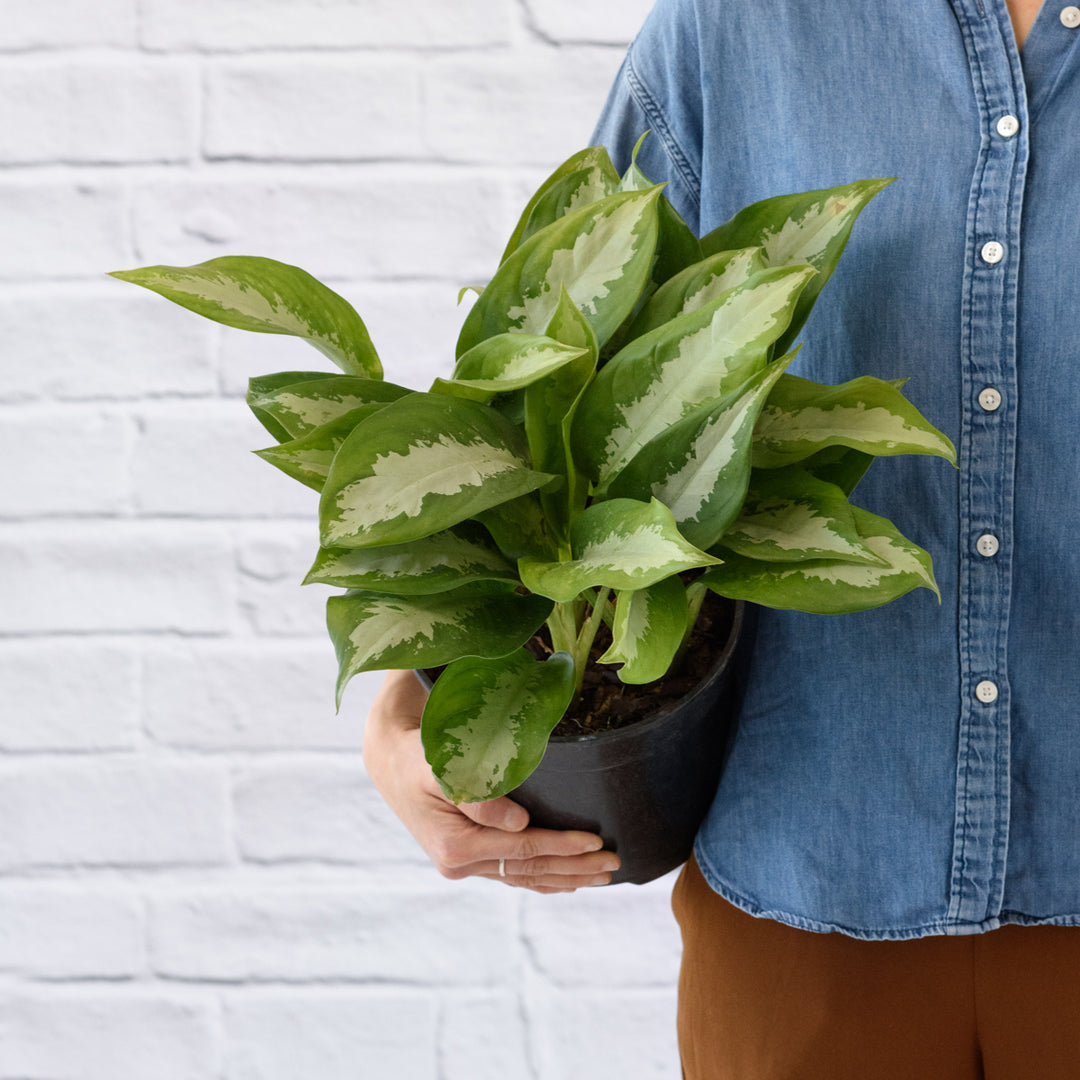
Chinese Evergreen
For those who want a little more colour without adding complexity, Chinese Evergreens are hard to beat. Their variety of beautifully patterned foliage introduces interest and softness while remaining wonderfully easy to care for.
- Available in a wide variety of colours and foliage patterns – There is one for everyone!
- Adaptable to different light conditions
- Forgiving of occasional missed watering
- Excellent for homes, offices, and reception areas
- Maintains an attractive appearance with minimal effort
- Offers a softer, more decorative aesthetic than many hardy plants
- Another A-level airpurifier
Shop Our Range of Chinese Evergreens here

Dragon Tree
Elegant, upright, and effortlessly stylish, the Dragon Tree is hands down our favourite architectural must-have. They add height and drama to any interior space without demanding constant care. They’re also incredibly elegant and, with time, only ever improve in form and structure.
- Creates a striking vertical focal point
- Adds height and structure to rooms with high ceilings
- Requires very little watering
- Works beautifully as a standalone statement plant
- Ideal for filling empty corners and transitional spaces
- Maintains a clean, contemporary appearance
- Available in a wide range of foliage colours, sizes and growth habits
Shop Our Range of Dragon Trees here

Pothos & Heartleaf Philodendrons
Adding a little cascading charm to a corner or shelf really can bring a space to life. These trailing favourites are proof that easy-care plants do not have to be boring. Their cascading vines soften interiors, add movement, and quickly create a lush, established feel.
- Fast-growing and highly rewarding
- Extremely forgiving and beginner-friendly
- Thrive in a variety of indoor light conditions
- Perfect for shelves, plant stands, and hanging displays
- Easy to prune and shape as they grow
- Instantly add a lush, vibrant atmosphere to interiors
Shop Our Range of Pothos and Philodendron here

Kentia Palm
Few indoor plants communicate effortless elegance quite like the Kentia Palm. Favoured by interior designers, luxury hotels, and premium commercial spaces, it brings a soft, tropical feel while remaining surprisingly tolerant of typical indoor conditions.
- Creates an instant sense of luxury and sophistication
- Graceful arching fronds soften hard architectural lines
- Adapts well to indoor environments and filtered light
- More tolerant of lower light than many other palm species
- Requires relatively little maintenance once established
- Works beautifully as a large statement plant in homes and offices
- Adds height, movement, and a relaxed atmosphere to any space

Bonus Plant Choice: Broadleaf Lady Palm
If there is one plant that quietly excels in almost every interior setting, it is the Broadleaf Lady Palm. Its rich green foliage, elegant fan-shaped leaves, and naturally refined growth habit make it a favourite among us plant enthusiasts
- Exceptionally adaptable to indoor conditions
- Tolerates lower-light environments with ease
- Dense foliage creates a lush, established appearance
- Slow-growing and easy to maintain
- Excellent for creating privacy and softening large spaces
- Delivers a premium, mature look that elevates any interior design scheme
Shop Our Broadleaf Lady Palms here

Looking for Something More Dramatic?
Once you've gained confidence with easy-care indoor plants, there are plenty of larger statement plants that can take your interior design to the next level.
The iconic Fiddle Leaf Fig remains one of the most sought-after designer plants thanks to its large, sculptural leaves and striking architectural form. While it appreciates a little more attention than some of the plants above, the visual impact it creates is often well worth the effort.
Other popular statement Ficus Plants include large Rubber Trees, Ficus Audrey, Ficus Longifolia and the Weeping Fig, all of which can transform an ordinary room into a memorable interior.Complete the Look With the Right Plant Styling

Whether you’ve brought home a gorgeous living houseplant or have gone for a high-quality artificial option, the plant itself is only half the story. In the world of interior design, greenery is rarely left to stand alone. Instead, the pot, the stand, or the hanger becomes part of the final picture, working together to create a look that feels intentional rather than just filling a gap.
In fact, the biggest giveaway that a faux plant isn’t real usually has nothing to do with the leaves. Most artificial plants come in lightweight, basic starter pots meant for transport, not display. Much like the black plastic nursery pots that living plants come in, they aren't doing your home decor any favours. Professional stylists almost always drop them into a decorative planter to instantly root them into the room’s aesthetic.
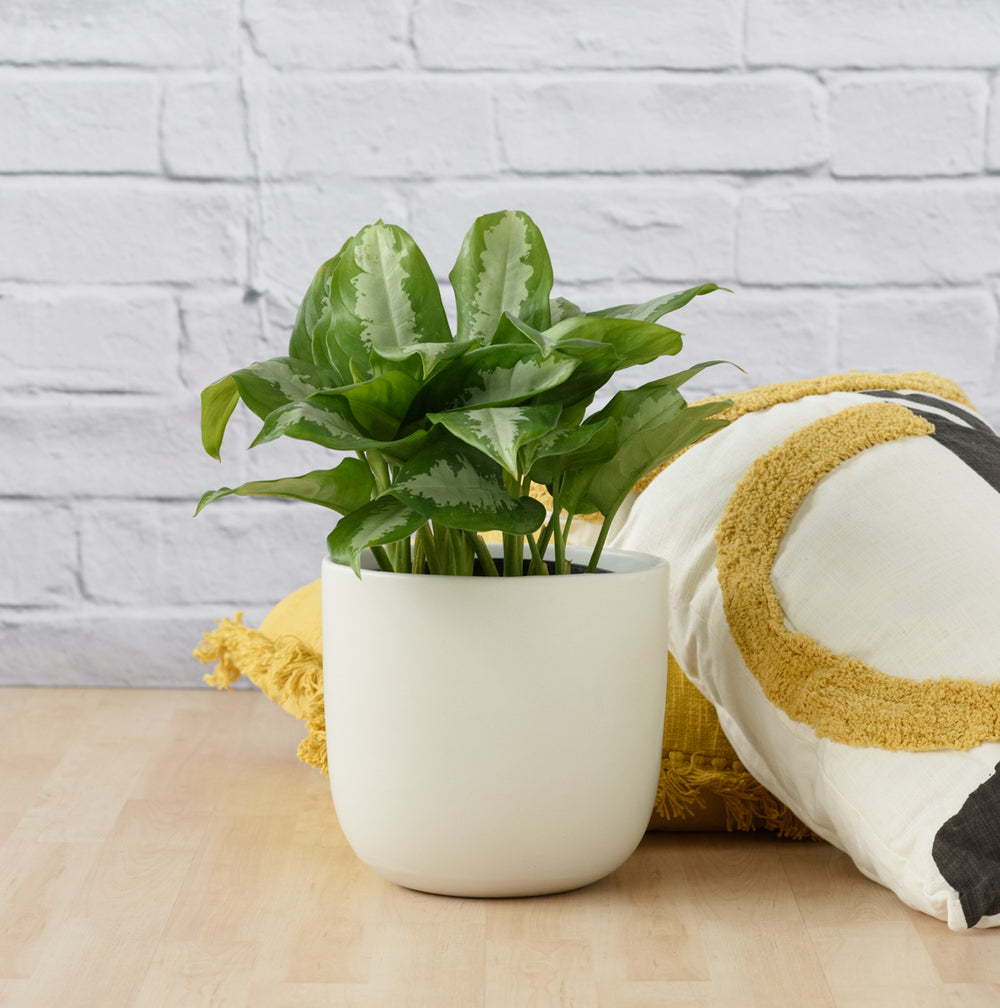
The exact same rule applies to living houseplants. While a plastic nursery pot is ideal for healthy root growth, it was never meant to be part of your design scheme. Placing your plant into a beautiful ceramic, terracotta, or Palm Leaf woven basket acts as a bridge between nature and your architecture, tying the greenery into your existing colours, textures, and overall style.
Once you’ve paired your plant with its perfect pot, you can start playing with the fun part: layers, height, and visual balance.

Choosing the Right Planter for Your Space
When browsing for the perfect planter, think about the specific problem you are trying to solve in the room. Different shapes can completely change how a plant's visual weight is perceived:
-
Space Savers – Taller, Thinner Planters: If you're working with tighter floor space, narrow corners, or crowded shelves, look for sleek, elevated silhouettes like our European Verticle Planters or the Taller version of The Bios Planter. Because they are thinner and taller, they draw the eye upwards, giving you all the impact of a large statement piece without hogging precious floor real estate. They act like a pedestal, instantly making a smaller, standard plant look statuesque and impactful.

-
Softer textures – Woven & Organic Textiles: In rooms with lots of hard lines, glass, or smooth metallics, a sleek ceramic might feel too cold. This is where slipping your nursery pot into a textured Palm Leaf Basket (like our Sinan or Fundo styles) or Cotton Cord Planters works wonders. They instantly soften a room, bringing in an earthy, laid-back warmth that suits Organic Modern spaces perfectly.
-
Bold, Sturdy Ceramics: For tabletop surfaces, sideboards, or deep shelves, a sturdier ceramic planter, like our colourful Pluto, Pastille or Pogo ranges, grounds your greenery. They provide a solid, premium anchor for top-heavy plants and let you inject subtle pops of colour (like Vintage Green, Sage, Oxblood Red or Melon Pink) that complement your soft furnishings.

Once you’ve paired your plant with its perfect pot shape, you can start playing with the extra details: layers, height, and visual balance.
If you have a smaller plant that deserves to be a feature, popping it onto an Orion or Hairpin Plant Stand instantly gives it a bit more focus. Elevating your planters and plants means you break up the monotony of having everything sitting at floor level. Suddenly, your eye travels up and down through different layers of greenery, making your space feel dynamic, lush, and a little more like a natural jungle.
Don't forget about your vertical real estate, either. If you love clean, architectural lines that suit modern or minimalist spaces, our Andro Plant Hangers are an easy win. For spaces that lean more to the softer interior design styles, a handcrafted Macramé Plant Hanger introduces the perfect touch of softness and texture to your plant design. Plus, hanging your plants frees up valuable surface space, allowing trailing favourites like Pothos and Heartleaf Philodendrons to cascade as a living wall feature.
For something completely different, our handcrafted Mossballs (Kokedama) offer a beautiful, sculptural twist on traditional potting. Suspended from a ceiling hook or nestled onto a decorative tray, they blur the line between houseplants and art, creating an instant conversation piece.
Finally, remember that the smallest details often make the biggest impact. Adding a few decorative stones around the base of your plants hides those ugly nursery liners and gives the arrangement a cleaner, established feel. With the right combination of accessories, everyday favourites like ZZ Plants, Snake Plants, and Peace Lilies can quickly transform from simple houseplants into purposeful statement pieces.

Choose Living Design
Artificial plants offer convenience, and in the right setting, they can be an excellent design choice. But when it comes to creating interiors that feel authentic and welcoming and come with a number of benefits, nothing quite compares to living plants.
With today's wide selection of low-maintenance indoor plants, enjoying the beauty and love of real greenery has never been easier. Pair the right plant with a thoughtfully chosen planter or plant accessory, and you'll create a space that feels considered, balanced, and designed to be lived in.
Explore Plantify's collection of low-maintenance indoor plants, premium planters, plant stands, hanging planters, and styling accessories to create a space that feels vibrant, welcoming, and unmistakably alive.




Leave a comment